About Peace Builders Academy
An ecumenical initiative to equip and connect peacemakers and/or people of faith with practical ways for building a culture of justice and peace locally and globally.
Contact usOur Vision
Finding ourselves in a world of violence, brutality, injustice, and war, we are guided by the spiritual and moral vision of The World House which was so eloquently described by the Rev. Dr. Martin Luther King in his book: Where do We Go from Here: Chaos or Community?
Like King’s World House, our vision of peace understands that the evils of structural injustice—racism, materialism, and militarism as well as colonialism and imperialism-- are themselves the cause of conflict. “No justice, no peace.” A true peace--a “just peace”-- only results from justice-making and the eventual eradication of injustice. Our vision of peace building begins with the justice-making in a global context in which the evils of racism, materialism, militarism, as well as colonialism and imperialism are intertwined at home and abroad. We embrace King’s vision of the World House because it moves us from allegiances to tribe, nation, property, race, class, and religion to a world-wide, ecumenical fellowship.
Our Mission
To share and uplift educational experiences, campaigns, events, actions, and forms of resistance in confronting injustice, transforming conflict, and building a culture of peace based on justice and equity. Undergirding our vision and mission are the principles of nonviolence which were highlighted by MLK, Jr. and the civil rights movement of the USA. In addition, the paradigm of liberation theologies and the Christian model of Jesus’s life guide much of the praxis of peacemaking noted in this website.
Martin Luther King Principles of Nonviolence — a Way of Life
Use spiritual and moral force to confront injustice. Be a vital force for positive change and reconciliation.
Build the World House in which justice prevails and all persons can attain their full human potential.
Attack forces of evil, not people who are doing evil.
Accept suffering as a type of moral authority in order to achieve your goal. Do not retaliate.
Keep your spirit and morale uplifted in your nonviolent work.
Nonviolence is both the means and the end because the moral arc of the universe eventually bends toward justice.
Our Working Assumptions
- Positive, constructive change is possible.
- We share one world and, therefore, we are called to share the world, respect the dignity of each other, and seek win/win solutions to our conflicts.
- Violent solutions are temporary because they seek “power over” of one party over another and do not preserve the dignity of conflicting parties.
- Nonviolence is not a passive but an active, creative strategy for justice building and peacemaking.
- Nonviolence can transform the relationship between conflicting parties to one of cooperation rather than combat, and “shared power” rather than “power over”.
- Revenge is never a way that leads to peace. Forgiveness can be.
- Justice-making is the pathway to peace because it seeks to create equity in policies and practices for all parties.
- Healing from injustice and rebuilding a community is a key prerequisite to peace.
- Nonviolent peacebuilding is the work of all humanity which is called to leave the world better than we found it.
Our Beliefs
- We are all loved unconditionally by God. In God’s eyes, no person or groups are worth more or less than another.
- We are not all alike. We are diverse and this is a blessing and gift of God to the world.
- We all have a spark of the divine in us, no matter what we have done.
- We are all called to play a role in peacemaking. Peacemaking is an intentional choice we make. “Blessed are the peacemakers for they will be children of God.”
- Models of nonviolent peacemaking are found in the way of life of spiritual figures, like: Gandhi or Rev. Dr. Martin Luther King or Thich Nhat Hanh and many others. They are also present in ancient sacred scriptures of Islam, Christianity, Buddhism, the Hebrew prophets, Judaism, and many other religious traditions.
- Mainline religious traditions remind us of our moral and spiritual mandate: to protect and care for the least, the last, and the lost of our days.
- God is present in our daily lives and world, inviting us to build a just world that will yield the fruits of peace.
About Joyce
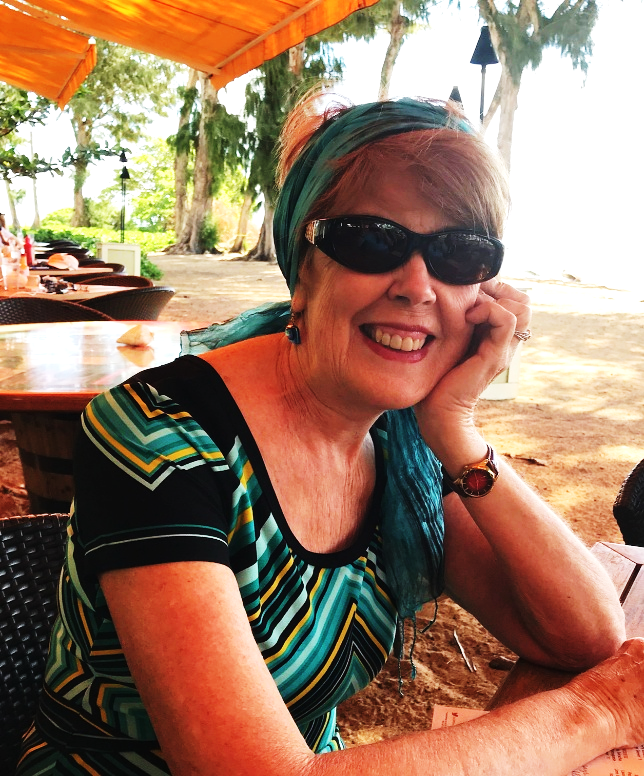
Rev. Dr. Joyce Penfield, Founder & CEO
Since birth, I have been trying to find and use better ways of doing what God asks of us, according to Micah 6:8: to seek justice, to love and act with kindness and mercy, and to walk humbly with God. I draw my guidance and direction from the praxis of liberation theologies in the world and my approach to learning from Paulo Freire’s “popular education”.
My hope is that in this website more people will be connected with other groups, resources, and opportunities doing the hard work of justice-making at a grassroots level. This website introduces you to groups and models of justice education which I have encountered and/or participated in over the last four decades of my life. I share them with you on this website because they offer concrete examples of a nonviolent and transformative approach to justice-making and peacebuilding.